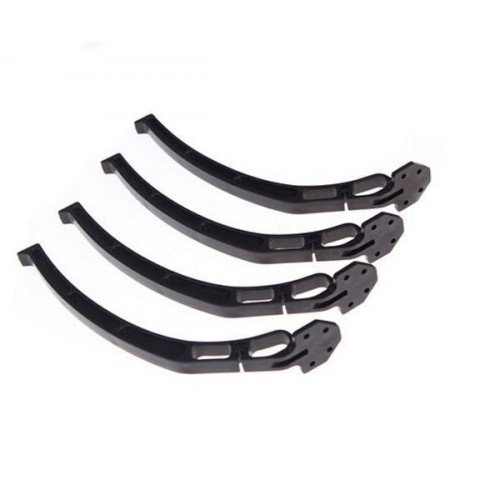
Shock Absorption: This is a primary function, helping to dissipate the impact energy during landing and reducing the stress on the drone's frame and internal components. Options range from simple flexible plastic or rubber designs to more advanced systems with spring or oleo-pneumatic (gas/oil) shock absorbers. Sufficient Ground Clearance: Taller landing gear provides ample space between the drone's body/payload (like cameras or gimbals) and the ground, preventing damage from debris, uneven terrain, or hard landings. Stability: A wide stance (wheel track) improves ground stability and maneuverability, reducing the risk of tipping or rolling over, especially on uneven surfaces. Durable and Lightweight Materials: Landing gear should be constructed from materials that offer a good balance of strength, impact resistance, and low weight to avoid compromising flight performance. Common materials include: ABS Plastic: Known for being sturdy, flexible, and lightweight. Carbon Fiber: Offers high strength and durability while keeping weight minimal. Aluminum Alloy: Used in some components for strength and flexibility. Skidproof Design: Features like skid-proof footpads help ensure a secure landing, preventing the drone from sliding uncontrollably on various surfaces. Compatibility: Ensure the landing gear is compatible with your specific drone frame (e.g., DJI F450, F550, Mavic Mini 2) or is a universal type that can be adapted. Additional Safety Options: For high-value drones or specific operations, consider features like LED lights for night flying or even a safety parachute system